MP3 players are now capable of many things including making your life easier while traveling.
With more of us traveling these days whether it be across State, interstate or around the world, often one home comfort we miss is our music. The choice of music player has been limited over the years to either tape cassette or a CD player, the major problem was the carrying of the units and the box of tapes or CD's.
With the invention of the MP3 player, the saving of both weight and space has been greatly improved, and the convenience is just fantastic. But the wide choice of MP3 players available has created a few other challenges, mainly with the huge choice and functionality of MP3 players available today.
Choosing the Best MP3 player for Travel, has not been so easy, until Today.
Imagine combining your CD player, DVD player, Laptop (the important info), voice recorder and extra memory cards for your digital camera all into one small unit.
The following will give you a few ideas as to what functionality is available in MP3 players available today, that you could use while traveling.
First things first:
To Choose the Best MP3 player for travel we need to have an idea as to what we may want to use it for.
Some Ideas, apart from listening to music,
Listening to the radio station (for local interest or emergency)
A podcast (Download a recording of the local places of interest)
A voice recorder (to make notes of where you have been or places of interest)
Reading or listening to eBooks (while in transit)
While jogging (we all need a bit of exercise even when on holiday)
Storing and viewing Photo's from our camera or videos stored from before we left home.
Are you going to go snorkling, if so do you want your music?
Filing our itinary and flight details.
Playing Games, to fill in time.
Use your MP3 player to make a journal of your travels.
This list has just a few ideas as to what the modern MP3 players can do, once you have thought through your own needs you will be in a much better position to 'Choose the best MP3 player for your travels'.
For more information on MP3 players for travel check out www.mp3 music player info.com Where you can download an eBook on 'Choosing the best MP3 player for you' and see many of the latest MP3 players and accessories.
About the Author
Charles West sells Technology products (cameras, DVD's, sound systems and of coarse MP3 players etc) for a retailer. Over the last couple of years he has come across many people who need a little more help in understanding the idea of MP3's and the different types of MP3 players and their uses. So to help he has developed http://www.mp3 music player info.com for people to understand all the many variants and uses of MP3 players.
Friday, October 5, 2007
Why do my Burned CDs not Play in my CD Player?
So you just burned a mix CD of your favorite tunes for a road trip you and your friends are going on. You play the disc back on your computer, everything works like a charm. You might have even tried playing it back on your new home stereo, and just like on your computer, it plays fine. You head out, pop the CD into your car stereo you bought in 1998, and………nothing. The disc just spins and you get no playback. I’ve had this happen to me on numerous occasions. And have always wondered, why does my CD play on some players yet not on others? There are a few different things that factor into this.
1. CD-R vs. CD-RW. You should be burning your audio CDs to CD-R media, not CD-RW media (CD re-writable). Some newer players will play CD-RW discs. But for the most part, the majority of audio CD players will only play CD-R discs.
2. Burn speed. Each brand of CD-R has a certified maximum burn speed, which is expressed as a multiple of the audio playback speed. So, a disc certified at 24x can be burnt at 24 times faster than the audio CD will be spinning when it is played. You must set the burn rate in your CD duplication software according to the disc’s specification, or the data will not be written reliably. This can result in skips, or CD-Rs that will play to a certain point and then just stop. Ideally you want to burn your CD lower than the certified speed, to take into account manufacturing defects in your burner or the disc.
3. Brand of CD-R If you have been burning CDs for a while, you probably have noticed that some brands of CD-Rs work well in some players, and some do not. CD-R discs are said to be “burned”. When you burn a CD-R disc, a focused laser beam darkens the chemical dye on your disc to mimic the bumps and flat spots that are generated on a replicated disc. (For more info on the differences between burning (CD duplication) and pressing (CD replication), please read my last article. http://ezinearticles.com/?The-Differences-Between-Short-Run-And-Long-Run-Cd-And-Dvd-Duplication-And-Replication&id=158412 ) Unfortunately, sometimes the mimicry is not perfect. And if you have an older CD player that was not designed to play CD-Rs, it will not always play them reliably.
By all means this is not a complete guide for troubleshooting your CD burning problems. But it should at least give you a little more insight into why those darn mix CDs you burned will not play in your home or car stereo! My best advice is that you burn your CDs according to the certified maximum burn speed (lower if possible), and try out different brands of CD media until you find one that works best in your player.
http://www.selfseo.com/story-12120.php
1. CD-R vs. CD-RW. You should be burning your audio CDs to CD-R media, not CD-RW media (CD re-writable). Some newer players will play CD-RW discs. But for the most part, the majority of audio CD players will only play CD-R discs.
2. Burn speed. Each brand of CD-R has a certified maximum burn speed, which is expressed as a multiple of the audio playback speed. So, a disc certified at 24x can be burnt at 24 times faster than the audio CD will be spinning when it is played. You must set the burn rate in your CD duplication software according to the disc’s specification, or the data will not be written reliably. This can result in skips, or CD-Rs that will play to a certain point and then just stop. Ideally you want to burn your CD lower than the certified speed, to take into account manufacturing defects in your burner or the disc.
3. Brand of CD-R If you have been burning CDs for a while, you probably have noticed that some brands of CD-Rs work well in some players, and some do not. CD-R discs are said to be “burned”. When you burn a CD-R disc, a focused laser beam darkens the chemical dye on your disc to mimic the bumps and flat spots that are generated on a replicated disc. (For more info on the differences between burning (CD duplication) and pressing (CD replication), please read my last article. http://ezinearticles.com/?The-Differences-Between-Short-Run-And-Long-Run-Cd-And-Dvd-Duplication-And-Replication&id=158412 ) Unfortunately, sometimes the mimicry is not perfect. And if you have an older CD player that was not designed to play CD-Rs, it will not always play them reliably.
By all means this is not a complete guide for troubleshooting your CD burning problems. But it should at least give you a little more insight into why those darn mix CDs you burned will not play in your home or car stereo! My best advice is that you burn your CDs according to the certified maximum burn speed (lower if possible), and try out different brands of CD media until you find one that works best in your player.
http://www.selfseo.com/story-12120.php

Inside Camcorders: Terms, Definitions, DVD Formats/Capacities - What Camcorder is Best for You?
WHAT IS THE CAPACITY DIFFERENCE BETWEEN MINIDV AND FULL SIZE DVD’S?
DVD’s come in Two Sizes. The mini CD size of 80 mm (about 3 1/8” in diameter) and the Standard CD size of 120 mm (about 4 ¾” in diameter). The Full Size DVD’s look just like Standard CD’s. DVD’s have two useable sides. Each side can have two layers for a total of four layers per disc.
DVD FORMATS AND CAPACITIES
120 mm (4 ¾”) DVD – FULL SIZE DVD
DVD ROM (Read Only Memory) (Full Size DVD 120 mm)
Maximum of two layers per side
Top Layer: 4.27 Gigabytes
Bottom Layer: 4.27 Gigabytes
Single Sided (two layers) 9.4 Gigabytes
Double Sided (two layers per side) 17 Gigabytes
80 mm (3 1/8") MiniDV
DVD ROM (Read Only Memory)
Maximum of two layers per side
Top Layer: 1.46 Gigabytes
Bottom Layer: 1.46 Gigabytes
Single Sided (two layers) 2.92 Gigabytes
Double Sided (two layers per side) 5.32 Gigabytes
120 mm (4 ¾”) DVD – FULL SIZE DVD
DVD WORM (Write Once, Read Many)
Maximum of one layers per side
Single Sided (one layer) 4.7 Gigabytes
Double Sided (one layer per side) 9.4 Gigabytes
120 mm (4 ¾”) DVD – FULL SIZE DVD
DVD RW (Read Write, Rewritable) and RAM (Random Access Memory) Maximum of one layers per side
Single Sided (one layer) 4.7 Gigabytes
Double Sided (one layer per side) 9.4 Gigabytes
If you just want to preserve and watch your raw video footage and don't want to do anything else, a DVD camcorder is good choice. Today the miniDV is still the Camcorder of choice. They offer the best quality, the largest selection and the highest compatibility with video editing programs.
Camcorders that record to hard drive are probably going to reign in the future, however you will be stuck with lower quality MPEG-2 and lower compatibility with video editing programs.
WHAT IS THE DIFFERENT BETWEEN OPTICAL ZOOM AND DIGITAL ZOOM?
A digital camcorder's optical zoom involves the use of actual moving lenses to zoom in (like in a binocular) while the digital zoom goes in closer digitally and enlarges the picture electronically. This results in a lower resolution thereby producing a lower quality picture. When using optical zoom, there is no loss in quality, but when digital zoom is used, the image may become grainy. Look for a camcorder with a decent amount of optical zoom like 10x or 20x. If you plan to use your Camcorder to tape sporting events, a 20x or 25x optical is best.
WHAT IS CCD?
A CCD camcorder uses a small, rectangular piece of silicon rather than a piece of film to receive incoming light called a Charge-Coupled Device (CCD). The CCD is the most element of the camcorder because it is a grid of individual light-sensitive cells called "photosites" or pixels. Each photosite is one element of the whole picture that is formed and is called a picture element or “pixel". The more common CCDs found in camcorders and other retail devices have a pixel array that is a few hundred pixels high by a few hundred pixels wide (e.g., 500x300, or 320x200), yielding tens of thousands of pixels.
DO YOU KNOW AN IMAGE MADE FOR WIDESCREEN IS DIFFERENT THAN ONE ADAPTED TO WIDESCREEN?
So why is the way you record widescreen images so important? Because you want an image made for widescreen, not adapted for widescreen. Widescreen is the future-every HD television is widescreen. Camcorders should use the entire width of its image sensor to capture your precious video in true 16:9 format. What difference does that make? With more pixels captured, you get better image quality. Some camcorders force the wider picture into a smaller space on the sensor - giving you a less true image, with fewer pixels and lower quality. Remember - widescreen is the future - be sure you invest in that future when choosing your Camcorder.
WHAT'S THE DIFFERENCE BETWEEN HD AND HDV?
HDV is a video tape recording format developed to record HD signals. Therefore, HDV is real high definition. It has two distinguishing characteristics from earlier HD recording formats. First, it utilizes widely available and economical DV tape cassettes as a storage medium. Secondly, it employs highly efficient MPEG-2 compression.
WHAT IS RGB?
Bayer color filter array is a popular format for digital acquisition of color images. In order to obtain color information, the color image sensor is covered with either a red, a green, or a blue filter, in a repeating pattern. This pattern, or sequence, of filters can vary, but the widely adopted “Bayer” pattern, which was invented at Kodak, is a repeating 2x2 arrangement.
When the image sensor is read out, line by line, the pixel sequence comes out GRGRGR, etc., and then the alternate line sequence is BGBGBG, etc. This output is called sequential RGB (or sRGB).
Jennifer Giuliano
ECommerce Retailer & Stay at Home Mother of Three
http://www.electrifymenow.com
info@electrifymenow.com
After being "job eliminated" from my employer after almost 16 years, I decided it was time for me to start a business of my own. One my children could be involved with and one that could be handed down to them later in life. I currently have two online businesses and am in the process of opening four more that I hope to have operating by July 2006.
I chose eCommerce Retail because there are many things I am passionate about and one was helping people. I am able to do a variety of things that make a positive impact on people and families. It also allows me to be home with my children during the most precious times of their life and this is what I am most passionate about!
http://www.selfseo.com/story-12118.php
DVD’s come in Two Sizes. The mini CD size of 80 mm (about 3 1/8” in diameter) and the Standard CD size of 120 mm (about 4 ¾” in diameter). The Full Size DVD’s look just like Standard CD’s. DVD’s have two useable sides. Each side can have two layers for a total of four layers per disc.
DVD FORMATS AND CAPACITIES
120 mm (4 ¾”) DVD – FULL SIZE DVD
DVD ROM (Read Only Memory) (Full Size DVD 120 mm)
Maximum of two layers per side
Top Layer: 4.27 Gigabytes
Bottom Layer: 4.27 Gigabytes
Single Sided (two layers) 9.4 Gigabytes
Double Sided (two layers per side) 17 Gigabytes
80 mm (3 1/8") MiniDV
DVD ROM (Read Only Memory)
Maximum of two layers per side
Top Layer: 1.46 Gigabytes
Bottom Layer: 1.46 Gigabytes
Single Sided (two layers) 2.92 Gigabytes
Double Sided (two layers per side) 5.32 Gigabytes
120 mm (4 ¾”) DVD – FULL SIZE DVD
DVD WORM (Write Once, Read Many)
Maximum of one layers per side
Single Sided (one layer) 4.7 Gigabytes
Double Sided (one layer per side) 9.4 Gigabytes
120 mm (4 ¾”) DVD – FULL SIZE DVD
DVD RW (Read Write, Rewritable) and RAM (Random Access Memory) Maximum of one layers per side
Single Sided (one layer) 4.7 Gigabytes
Double Sided (one layer per side) 9.4 Gigabytes
If you just want to preserve and watch your raw video footage and don't want to do anything else, a DVD camcorder is good choice. Today the miniDV is still the Camcorder of choice. They offer the best quality, the largest selection and the highest compatibility with video editing programs.
Camcorders that record to hard drive are probably going to reign in the future, however you will be stuck with lower quality MPEG-2 and lower compatibility with video editing programs.
WHAT IS THE DIFFERENT BETWEEN OPTICAL ZOOM AND DIGITAL ZOOM?
A digital camcorder's optical zoom involves the use of actual moving lenses to zoom in (like in a binocular) while the digital zoom goes in closer digitally and enlarges the picture electronically. This results in a lower resolution thereby producing a lower quality picture. When using optical zoom, there is no loss in quality, but when digital zoom is used, the image may become grainy. Look for a camcorder with a decent amount of optical zoom like 10x or 20x. If you plan to use your Camcorder to tape sporting events, a 20x or 25x optical is best.
WHAT IS CCD?
A CCD camcorder uses a small, rectangular piece of silicon rather than a piece of film to receive incoming light called a Charge-Coupled Device (CCD). The CCD is the most element of the camcorder because it is a grid of individual light-sensitive cells called "photosites" or pixels. Each photosite is one element of the whole picture that is formed and is called a picture element or “pixel". The more common CCDs found in camcorders and other retail devices have a pixel array that is a few hundred pixels high by a few hundred pixels wide (e.g., 500x300, or 320x200), yielding tens of thousands of pixels.
DO YOU KNOW AN IMAGE MADE FOR WIDESCREEN IS DIFFERENT THAN ONE ADAPTED TO WIDESCREEN?
So why is the way you record widescreen images so important? Because you want an image made for widescreen, not adapted for widescreen. Widescreen is the future-every HD television is widescreen. Camcorders should use the entire width of its image sensor to capture your precious video in true 16:9 format. What difference does that make? With more pixels captured, you get better image quality. Some camcorders force the wider picture into a smaller space on the sensor - giving you a less true image, with fewer pixels and lower quality. Remember - widescreen is the future - be sure you invest in that future when choosing your Camcorder.
WHAT'S THE DIFFERENCE BETWEEN HD AND HDV?
HDV is a video tape recording format developed to record HD signals. Therefore, HDV is real high definition. It has two distinguishing characteristics from earlier HD recording formats. First, it utilizes widely available and economical DV tape cassettes as a storage medium. Secondly, it employs highly efficient MPEG-2 compression.
WHAT IS RGB?
Bayer color filter array is a popular format for digital acquisition of color images. In order to obtain color information, the color image sensor is covered with either a red, a green, or a blue filter, in a repeating pattern. This pattern, or sequence, of filters can vary, but the widely adopted “Bayer” pattern, which was invented at Kodak, is a repeating 2x2 arrangement.
When the image sensor is read out, line by line, the pixel sequence comes out GRGRGR, etc., and then the alternate line sequence is BGBGBG, etc. This output is called sequential RGB (or sRGB).
Jennifer Giuliano
ECommerce Retailer & Stay at Home Mother of Three
http://www.electrifymenow.com
info@electrifymenow.com
After being "job eliminated" from my employer after almost 16 years, I decided it was time for me to start a business of my own. One my children could be involved with and one that could be handed down to them later in life. I currently have two online businesses and am in the process of opening four more that I hope to have operating by July 2006.
I chose eCommerce Retail because there are many things I am passionate about and one was helping people. I am able to do a variety of things that make a positive impact on people and families. It also allows me to be home with my children during the most precious times of their life and this is what I am most passionate about!
http://www.selfseo.com/story-12118.php
The Differences Between Short Run And Long Run Cd And Dvd Duplication And Replication
Your band has just completed your demo CD and you have to send it off to be copied for distribution. Somehow you get put in charge of taking care of the CD copying. Diving into the CD and DVD duplication company’s website, you’re bombarded with cryptic technical terms you don’t understand. Two of those terms in particular jump out at you, short run duplication and long run replication. What’s the difference, and what do they both mean exactly? Well, I’m here to de-mystify this part of the process for you, hopefully making your job easier.
Short Run – Duplication
Short run CD and DVD duplication refers to the process in which CDs and DVDs are copied in amounts usually not exceeding 500 units. Duplication is done utilizing CD-R technology, effectively “burning” discs instead of creating them from scratch. There are a few drawbacks that come along with the duplication process, but also there are benefits as well. The benefits are a quicker turnaround rate, and cheaper project costs. While the main drawback of CD and DVD duplication is that duplicated discs do not always work in every home CD player, especially older models.
Long Run – Replication
Long run CD and DVD replication is the process in which CDs and DVDs are manufactured in amounts exceeding 500 units. The main difference between duplication and replication is that in the replication process the CDs or DVDs are molded, covered in reflective material, and then stamped with the data. This difference results in CDs and DVDs that are cheaper per unit and are 100% compatible in playback hardware. The main drawback of long run CD and DVD replication is the production time, which usually averages around 2 weeks.
With this information, I hope that your trip into the world of CD production is a little bit easier to understand and complete.
http://www.selfseo.com/story-11535.php
Short Run – Duplication
Short run CD and DVD duplication refers to the process in which CDs and DVDs are copied in amounts usually not exceeding 500 units. Duplication is done utilizing CD-R technology, effectively “burning” discs instead of creating them from scratch. There are a few drawbacks that come along with the duplication process, but also there are benefits as well. The benefits are a quicker turnaround rate, and cheaper project costs. While the main drawback of CD and DVD duplication is that duplicated discs do not always work in every home CD player, especially older models.
Long Run – Replication
Long run CD and DVD replication is the process in which CDs and DVDs are manufactured in amounts exceeding 500 units. The main difference between duplication and replication is that in the replication process the CDs or DVDs are molded, covered in reflective material, and then stamped with the data. This difference results in CDs and DVDs that are cheaper per unit and are 100% compatible in playback hardware. The main drawback of long run CD and DVD replication is the production time, which usually averages around 2 weeks.
With this information, I hope that your trip into the world of CD production is a little bit easier to understand and complete.
http://www.selfseo.com/story-11535.php
Thursday, October 4, 2007
Free or Low-Cost Downloads
There is a resource of utilities and add on elements available on the internet that would complement almost any computer users day to day practices but most users are not aware of the availability or benefits of these wonderful little elements. These downloads are Freeware Applications and Shareware Applications. Freeware is software, available for download, which is given away by the author. Although it is available for free, the author retains the copyright to prevent downloaders from reproducing it and selling it. Shareware is usually offered for a small fee. Once purchased you are registered with the producer and provided service assistance and updates. Both shareware and freeware depend on a user honor code to not resell the product or copy and distribute the applications that do require a small fee. Freeware and Shareware are able to cost next to nothing if they cost anything at all because they are offered directly to customers and do not carry along packaging or advertising costs with them.
These applications cover a broad spectrum of uses. Some are helpful with office type applications, some prov
. . .
1Mb shareware with a cost of $30, could be a helpful utility for you. 92Mb application with a shareware cost of $20. It is a violation of privacy and goes on without most users consent. This application sports a simple easy to use interface that allows the user to convert MP3 files to wav files that are used to burn cd’s that can be played in any cd player. com for a current list of downloads that incorporate adware and spyware into their applications. If you browse the internet frequently there is nothing in the world more frustrating than pop up ads, with this download you can take back control of web browsing and look forward to hours upon hours of unobstructed surfing. Once familiar with this application and it user interface the user can set parameters and modify it usability. It will create mailing labels, print envelopes, send faxes, and even generate certain types of reports. This application also adds a menu command to you Microsoft Word application. You can investigate software before you download and reference user testimonials or professional product reviews. Another application to complement AntiVir Personal Edition is AntiVirus Fire Drill, a 68kb freeware with zero cost.
http://www.megaessays.com/viewpaper/91713.html
These applications cover a broad spectrum of uses. Some are helpful with office type applications, some prov
. . .
1Mb shareware with a cost of $30, could be a helpful utility for you. 92Mb application with a shareware cost of $20. It is a violation of privacy and goes on without most users consent. This application sports a simple easy to use interface that allows the user to convert MP3 files to wav files that are used to burn cd’s that can be played in any cd player. com for a current list of downloads that incorporate adware and spyware into their applications. If you browse the internet frequently there is nothing in the world more frustrating than pop up ads, with this download you can take back control of web browsing and look forward to hours upon hours of unobstructed surfing. Once familiar with this application and it user interface the user can set parameters and modify it usability. It will create mailing labels, print envelopes, send faxes, and even generate certain types of reports. This application also adds a menu command to you Microsoft Word application. You can investigate software before you download and reference user testimonials or professional product reviews. Another application to complement AntiVir Personal Edition is AntiVirus Fire Drill, a 68kb freeware with zero cost.
http://www.megaessays.com/viewpaper/91713.html
Original CD-A8T Valve CD player
There is obviously a joker working at the Original Company Ltd. Despite the company's name, all the CD players in its range echo the styling of more expensive players made by some of the world's most famous hi-fi manufacturers. The CD-A8T looks eerily similar to a model made in the US by Mark Levinson. The S version could almost have issued from Arcam's factory in Britain. Original's Leonardo 9.3 is nearly a dead-ringer for Denmark's legendary ZZ-Eight, from Bow Technologies.
Any similarities are only skin-deep. Inside the CD-A8T is a disc transport designed by Philips, but now manufactured by China's Cosmic Co, along with a VAM12 laser assembly and various chip-sets made in China by Burr-Brown and Philips. There are two Russian imports: a pair of Electro-Harmonix 12AU7 thermionic valves that, according to Original, "give a warm, beautiful and brave sound". These internal components don't represent the state of the art in electronics but they are very high quality, and the printed circuit boards into which they're inserted are built to exacting standards.
All the CD-A8T's digital circuitry is solid-state, using conventional transistors and diodes. It's the analog stages that are different.
There are two completely separate audio outputs. One is solid-state, using Burr-Brown ICs. The other uses the valves. Plug one of these outputs into the CD input of your amplifier and the other into the auxiliary input and use your amplifier's Source switch to alternate between the two to establish whether you prefer the warmer sound of the valves to the cleaner but distinctly colder sound of the ICs.
It's difficult to compare the two directly, because the voltage levels are different, and the valves invert the polarity of the audio signal, but we gradually came to prefer listening to the valve output. If you're interested in the sound quality of valves but don't want the hassle of owning a valve amplifier, Original's CD-A8T could be the perfect compromise
http://www.theage.com.au/news/reviews/original-cda8t-valve-cd-player/2007/04/14/1186857411773.html
Any similarities are only skin-deep. Inside the CD-A8T is a disc transport designed by Philips, but now manufactured by China's Cosmic Co, along with a VAM12 laser assembly and various chip-sets made in China by Burr-Brown and Philips. There are two Russian imports: a pair of Electro-Harmonix 12AU7 thermionic valves that, according to Original, "give a warm, beautiful and brave sound". These internal components don't represent the state of the art in electronics but they are very high quality, and the printed circuit boards into which they're inserted are built to exacting standards.
All the CD-A8T's digital circuitry is solid-state, using conventional transistors and diodes. It's the analog stages that are different.
There are two completely separate audio outputs. One is solid-state, using Burr-Brown ICs. The other uses the valves. Plug one of these outputs into the CD input of your amplifier and the other into the auxiliary input and use your amplifier's Source switch to alternate between the two to establish whether you prefer the warmer sound of the valves to the cleaner but distinctly colder sound of the ICs.
It's difficult to compare the two directly, because the voltage levels are different, and the valves invert the polarity of the audio signal, but we gradually came to prefer listening to the valve output. If you're interested in the sound quality of valves but don't want the hassle of owning a valve amplifier, Original's CD-A8T could be the perfect compromise
http://www.theage.com.au/news/reviews/original-cda8t-valve-cd-player/2007/04/14/1186857411773.html
Rega Apollo CD player
You've heard it said that the early bird catches the worm, which is all well and good if you like worms. If you're more interested in music, you might want to follow the lead of Roy Gandy instead: He's the managing director of Rega Research, a 331/3-year-old audio company that was the very last of its kind to enter the CD market. Rega's first CD player, the Planet of 1996, was a success in virtually every way.
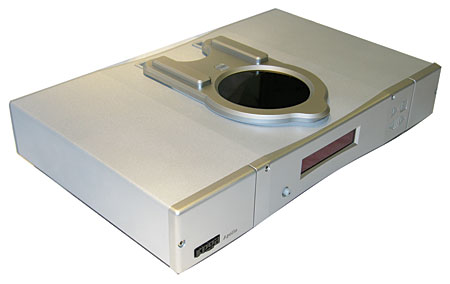
The world has moved on since then, for better and for worse: better in the sense that digital sound has continued to improve, worse in the sense that the major corporations with the technology for making integrated digital control systems—the basic servo and data-control chipsets—have shifted their focus toward DVD and away from the humble music-only compact disc. That state of affairs has prompted Gandy and company to tap a different technology source, and to launch an entirely new player: the $995 Rega Apollo.
As Gandy puts it, "If we go back three years, that's when 'the big five' stopped supplying kit to specialist manufacturers. And all of them rely on chipsets or transports or whatever from Sony, Philips, and the rest. Around the same time, CD-player sales were decreasing. So Rega got together with two other specialist manufacturers in the UK, and we eventually found a company near Cambridge that had foreseen this hole in the market, with all the Japanese companies pulling out. They predicted, correctly, that a number of people would continue to want to make boomboxes in China, so they developed their own chipsets, and not just the software."
Gandy can't name the UK company in question—his relationship with them involves a confidentiality agreement—but he says that both they and Rega stand to benefit. "We agreed to work with them at the debugging stage, to help work out various problems—which their Chinese clients are in less [of] a position to do—and in exchange Rega gets to buy chipsets in small quantities."
Small in amount—but hardly small in power. Gandy says that the Apollo incorporates more than 20MB of memory, along with true 32-bit processing capabilities. That's several times the power of early digital control systems, and Gandy suggests that this newer level of technology was needed all along to attain the performance goals set for "Red Book" digital playback in the first place. "This isn't at all like working with the old CD chipsets," he says. "For the first time, we've got a CD operating mechanism that is so good, all we've had to do is avoid messing it up. Now, for example, we can design a better power supply and it makes the player better instead of worse: We don't have to worry that we're taking out something that was masking a flaw."
From puck to chuck
The Apollo is built into the same casework as the Rega Planet, with one key difference: The new player's transport holds the disc with a three-point ball chuck instead of a magnetic puck. That means the motor has less mass to spin, so the disc can accelerate and decelerate with greater ease. It also means that Rega's already elegant transport lid is now a single, undisturbed expanse of smoked Plexiglas—which looks very nice indeed.
The Apollo's transport, manufactured by Sanyo, is compliantly suspended from the upper portion of Rega's standard chassis of cast aluminum alloy. The D/A converter is Wolfson's top-of-the-line WM8740, a dual-differential chip that operates in sigma-delta mode and supports word lengths of up to 24 bits. The output section, which is said to apply class-A amplification to a digital source component in an entirely new way, is Rega's own design.
Apart from all that, the Apollo is a straightforward thing, with a front-mounted board for the logic bits and a single main circuit board for all the rest, fastened to the bottom of the chassis alongside the smallish toroidal mains transformer. RCA and optical digital output jacks are on the rear panel for those who wish to use an outboard DAC, as well as the usual pair of phono jacks for line-level analog output. In addition to the mains switch, the front panel has only the most basic start, stop, and track-advance buttons, while those and a full brace of other user controls appear on the nicely styled remote handset—including a button that can be used to kill the display lights. To jump ahead just a bit: As with the same feature on recent CD players from Naim Audio, that last one really did make an audible difference for the better; all of my comments on sound quality below refer to the Apollo's performance with its display dark.
http://www.stereophile.com/cdplayers/606rega/
Subscribe to:
Posts (Atom)